


If you’re planning your first Himalayan trek, the Kedarkantha Trek is often the name you’ll hear again and again—and for good reason.
Unlike many treks that demand prior experience or intense endurance, Kedarkantha offers a rare combination: accessible trails, consistent scenic views, and a summit that actually feels like an achievement. You’re not just walking through mountains—you’re progressing through changing landscapes, from forests to snowfields, all within a few days.
This guide is not just information—it’s meant to help you understand what the trek really feels like, what it costs, and how to prepare properly.
Where Kedarkantha Is and Why It’s So Popular
Kedarkantha is located in the Govind Wildlife Sanctuary region of Uttarakhand, with Sankri village acting as the starting point.
What makes this trek stand out is not just the summit—it’s the journey itself:
- Dense pine and oak forests that feel untouched
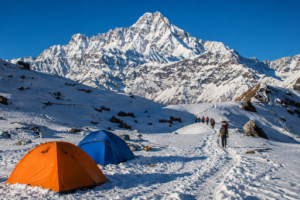
- Campsites that open into wide clearings with mountain views
- A summit climb that is challenging but achievable
At around 12,500 feet, it gives you a proper Himalayan experience without pushing you into extreme altitude risk zones.
What the Trek Actually Feels Like (Day-by-Day Reality)
Day 1: Reaching Sankri — The Real Start Happens Here
The road journey from Dehradun to Sankri is long, but important. This is where you mentally transition from city life to mountain pace.
Expect narrow roads, river views, and small villages. By the time you reach Sankri, you’ll already feel disconnected from urban noise—and that’s a good thing.
Day 2: First Walk Into the Forest
The trek begins gently. You walk through thick forests where sunlight barely reaches the ground in some areas.
There’s no rush here. The trail is steady, allowing your body to adjust. Juda Ka Talab, the campsite, appears almost suddenly—a quiet lake surrounded by trees. In winter, it freezes, creating a surreal landscape.
Day 3: Moving Above the Tree Line
This is where things start changing.
The forest slowly disappears, and the views open up. You begin to see distant peaks clearly. The air feels thinner, and the cold becomes more noticeable.
The base camp sits in an open area with wide mountain views. This is also where you mentally prepare for the summit push.
Day 4: The Summit Push — The Only Real Test
This is the toughest part of the trek.
You start before sunrise, usually in complete darkness. The climb is steep in sections, especially if there’s snow. Your pace slows down, and breathing becomes heavier.
But once you reach the top, everything changes.
You’re standing above clouds, surrounded by peaks stretching endlessly. It’s not just a view—it’s a moment that makes the entire trek worth it.
Day 5: Descent Feels Easier, But Don’t Relax Too Much
Going down is faster but requires control. Many people slip during descent because they underestimate it.
By the time you return to Sankri, the trek is technically over—but the experience stays with you.
Realistic Cost of Kedarkantha Trek
Let’s break this down honestly.
Most people spend somewhere between ₹7,000 to ₹12,000, depending on how they plan it.
Where your money goes:
- Trek package (guide, food, tents)
- Travel to Dehradun
- Local transport to Sankri
- Renting gear if you don’t own it
If you try to cut too many costs, you’ll compromise comfort and safety. So don’t go for the absolute cheapest option blindly.
Choosing the Right Time (This Matters More Than You Think)
Kedarkantha is open most of the year, but your experience depends heavily on timing.
- Winter (Dec–Feb): Snow-covered landscape, most popular
- Late Winter/Spring (Mar–Apr): Less harsh, still scenic
- Summer (May–June): Clear skies, easier conditions
- Monsoon: Avoid—risk is not worth it
- Autumn: Quiet and stable weather
If you want that classic “snow trek” experience, winter is the obvious choice. But it also means dealing with cold and tougher walking conditions.
How Difficult Is It—Honestly?
This is where people get misled.
Yes, Kedarkantha is beginner-friendly—but that doesn’t mean it’s effortless.
You’ll face:
- Continuous walking for hours
- Cold temperatures, especially at night
- A steep final climb
But you won’t need technical skills like rope work or climbing experience.
If you can:
- walk 4–5 km comfortably
- handle basic physical effort
you can complete this trek.
Packing Smart (Not Heavy)
Most beginners make one mistake: overpacking.
You don’t need everything—just the right things.
Focus on:
- Layered clothing instead of bulky jackets
- Proper trekking shoes (this matters more than anything)
- Essentials like water, snacks, and basic medication
The lighter your bag, the easier your trek feels.
Mistakes You Should Avoid
- Starting without any physical preparation
- Wearing new shoes without testing them
- Ignoring hydration
- Overestimating your speed
The trek is not a race. People who rush usually struggle more.
Getting There Without Confusion
Your journey always begins from Dehradun.
From there:
- Shared taxis or private vehicles take you to Sankri
- It’s a long drive, so start early
There’s no shortcut here—this is part of the trek experience.
Why Kedarkantha Works for First-Time Trekkers
This trek gives you:
- A real summit (not just a viewpoint)
- Diverse landscapes in a short duration
- Manageable difficulty
It’s not just about completing a trek—it’s about understanding what trekking feels like.
Conclusion
The Kedarkantha Trek is not just popular—it’s practical. It gives beginners a structured introduction to Himalayan trekking without overwhelming risk or complexity.
If you approach it with the right expectations, basic preparation, and a clear plan, it can easily become one of your most memorable outdoor experiences.